|
Getting your Trinity Audio player ready...
|
If you are pressing the brake pedal of your car and it feels harder than usual, then something is wrong. Or maybe your car is taking longer to stop, even when you push the brakes firmly? If so, your brake booster is the culprit!
A brake booster plays a crucial role in helping your car stop smoothly. You would have to apply a lot more force to the brake pedal without it. It can be unsafe and really exhausting. It is important to get it fixed when it starts acting up. But the thing is, you need your car all the time. You cannot just leave it at the repair shop for an uncertain period. So, how long does brake booster repair really take? Let’s find out.
When Brake Booster Repair Becomes Necessary
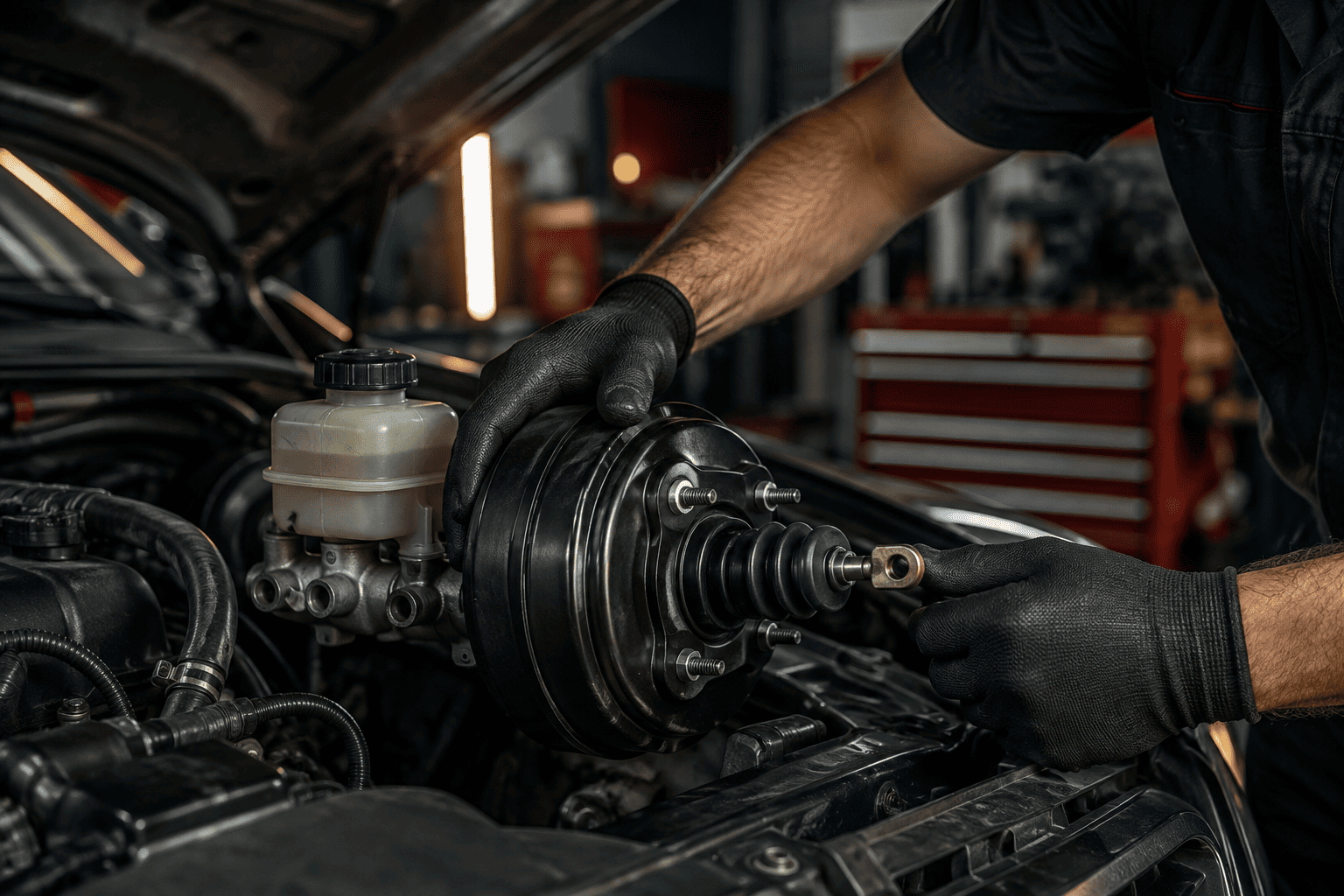
First things first. You need to understand why you need a brake booster repair in the first place. We are going to get technical here. The brake booster uses vacuum pressure. This pressure helps your foot apply enough force to the brakes. There will be very clear warning signs if it fails, such as:
- A stiff brake pedal
- A hissing noise when pressing the brakes
- The car is taking longer to stop
- The engine stalls when you hit the brakes
Yes, it feels inconvenient to go get them fixed. But it can lead to safety issues if you choose to ignore them. A faulty brake booster means you are relying only on your full leg strength to stop the car. Sounds doable? Now imagine an emergency! That is risky driving. You are putting your life on the line.
It is vital to get a professional inspection as soon as possible.
How Long Does Brake Booster Repair Take?
The exact time for the repair process depends on several factors. The repair guy has to consider the make and model of your car, the location of the booster, and whether additional parts need replacing.
The estimated time for the brake pedal repair is usually between two to four hours. This breakdown will clear your queries even better.
| REPAIR TYPE | ESTIMATED TIME |
| Inspection and Diagnosis | 30 minutes to an hour |
| Removing the old brake booster | 1 to 2 hours |
| Installing the new booster and Testing | 1 hour or less |
You can have the entire job completed in half a day (for many vehicles). Some mechanics need a bit longer if the booster is buried deep under the dashboard. Sometimes, other components like the master cylinder also need attention.
Factors That Can Affect Repair Time
Every car is different. They require different brake pedal repair jobs. Let’s discuss some key factors that can influence how long the process takes:
- Vehicle type
Smaller cars with simple brake systems are easier to work on. Larger vehicles usually have advanced braking systems. They have very tight engine compartments, which can take longer.
- Condition of the system
Sometimes our cars have hidden issues. Mechanics can find these issues. It can either be a damaged vacuum hose or a leaking master cylinder. Repairing these as well can add time to the repair.
- Replacement part availability
Quality car parts are hard to find. Sometimes the delay is not in the repair itself. It is because of waiting for the right part to arrive. If you have a rare or an old grandpa vehicle, get ready to wait for weeks!
- Mechanic’s experience
Everyone has a car guy they always go to. An experienced technician who has worked on your car model before can complete the job more quickly.
Don’t worry too much. Most repair jobs give a time estimate before work begins. You will know what to expect once you get there.
Signs It is Time to Replace Your Brake Booster
A failing brake booster can cause your brakes to become unreliable. No one wants that! If you can’t tell whether you need a brake pedal repair, that’s okay. Just look out for these things:
- Brake warning light on your dashboard
- Increased stopping distance even when braking normally
- A sinking brake pedal
- Engine performance issues when braking
Don’t wait too long, even if your car is still drivable!
Conclusion
The brake system is one of the most critical parts of your vehicle. The process seems pretty simple, but that does not mean you should ignore it. Experienced mechanics usually only take a few hours to repair a brake booster. No doubt, it is time well spent for your safety and peace of mind. Don’t wait if you start noticing strange noises from your pedal. Or if it becomes harder than usual to press. Schedule a brake pedal repair with a trusted auto shop near you. Fixing the problem early can save you money and, most importantly, keep you safe on the road.
FAQs
- What causes brake booster failure?
A leaking master cylinder rear seal that allows brake fluid into the booster usually causes a brake pedal failure. Sometimes there are vacuum issues. Like a bad check valve or leaking vacuum hoses.
- Can a brake booster be repaired?
Yes, brake boosters can be easily repaired! Sometimes, there are problems with the valve or the vacuum house. They can be just replaced.
- Is brake booster replacement worth it?
The answer is a definite yes! There are so many safety concerns with a faulty brake pedal. You would have to put immense pressure on the pedals to slow the car down. This is a major inconvenience!
- Does a brake booster have oil in it?
No! A brake booster is a dry component. Sometimes, oil can interfere with the brake pedal because of a faulty seal. The oil is sucked from the engine, to the pump, and then to the booster.
- How do I test my brake booster?
You can test your brake booster by first turning off the car. Start pumping the brakes until the pedal is hard. Then, hold the pedal down and start the engine. If the pedal sinks about an inch, the booster is fine. If the pedal remains hard, then there is a problem.